
By Calvin Whitlock · Last updated June 11, 2026 · About our methodology
TL;DR: "Big-rig friendly" means a campground, restaurant, or stop can physically and practically accommodate a large RV — typically a 40-foot-plus Class A motorhome or fifth wheel, often towing a second vehicle. The term has no industry-standard definition, so we built one. The Big-Rig Standard™ scores every location on a uniform 1–10 scale built from eight verifiable data points. One score. Same data points. Every stop.
What "big rig" means
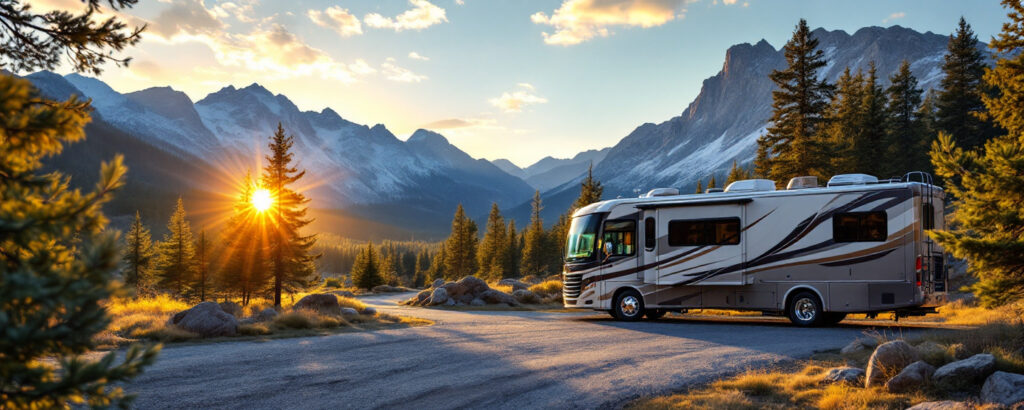
A big rig is a large recreational vehicle — generally a Class A motorhome or fifth-wheel trailer 40 feet or longer, frequently 43–45 feet, and often paired with a towed vehicle ("toad") that adds 15–20 feet to the total length. Diesel pushers, toy haulers, and triple-slide fifth wheels all fall under the term.
The defining challenge isn't just length. It's the combination of length, weight, turning radius, slide-out width, and ride height that determines whether a rig can actually get in, get set up, and get back out of a given location without trouble.
Why the term needs a standard
Search "big rig friendly campgrounds" and you'll get filter pages and listicles that apply the label inconsistently. One site calls a park "big rig friendly" because a single 40-foot site exists. Another means every site is a 70-foot concrete pull-through. The label, on its own, tells you almost nothing.
The Big-Rig Standard™ fixes that. Every location in this directory is scored on the same eight data points and reduced to a single, comparable number. A 9 in Florida means the same thing as a 9 in Oregon.
The eight data points
Every listing in the USA RV Directory displays the same data layer:
| # | Data point | What it tells a big-rig driver |
|---|---|---|
| 1 | Max rig length accommodated (ft) | The longest rig the site comfortably fits — rig plus slide-outs and tow vehicle, not just the pad number |
| 2 | Turn radius / entry approach | Whether you can swing the rig in without a 12-point turn or curb-hopping |
| 3 | Pull-through vs. back-in | Pull-through = drive in, drive out. Back-in = you'll be backing 40+ feet, often with an audience |
| 4 | Low-clearance warnings | Tree canopy, gateway arches, bridges, or covered structures that threaten a 13'6" roofline |
| 5 | Fuel access within 10 mi (diesel + propane) | Whether you can fuel a diesel pusher and refill propane without a detour |
| 6 | Grade warnings on approach | Steep climbs or descents on the access road that strain brakes and drivetrains |
| 7 | Overnight allowed (Y/N + restrictions) | For non-campground stops (restaurants, scenic stops): can you stay, and under what rules |
| 8 | Big-Rig Score (1–10) | The composite — every data point above, weighted and normalized |
How the Big-Rig Score is calculated
The Big-Rig Score is a weighted composite of six scoring factors, each scored against published specifications and verified or inferred location data, then normalized to a 1–10 scale and rounded to the nearest half-point.
| Scoring factor | Weight | What earns a full mark |
|---|---|---|
| Length capacity | 30% | Comfortably accommodates a 45 ft+ rig plus tow vehicle (60 ft+ pads) |
| Site type & power | 20% | Pull-through sites, 50-amp service, full hookups (water + sewer) |
| Maneuverability | 20% | Wide, paved interior roads; generous turn radius; ample site spacing; arrival assistance |
| Clearance & grade | 15% | No low clearance on approach or interior; level, gentle grade |
| Fuel & services within 10 mi | 10% | Diesel and propane available within a 10-mile radius |
| Stay flexibility | 5% | No restrictive length-of-stay limits or high reservation friction |
What each score band means
| Score | Band | What to expect |
|---|---|---|
| 9.0–10 | Rolls right in | 45 ft+ pull-through, 50-amp full hookups, wide paved roads, no clearance or grade issues, fuel nearby. Arrive tired and it's still easy. |
| 7.0–8.5 | Big-rig comfortable | 40–45 ft, mostly pull-through, full hookups. Minor caveats — a tighter section, a narrower road, or a length cap right at 45 ft. |
| 5.0–6.5 | Workable with planning | Fits 40 ft realistically; some back-in-only sites, tighter spacing, or a maneuvering quirk. Call ahead and request a specific site. |
| 3.0–4.5 | Tight | Under 40 ft is the safe bet. Real maneuvering or clearance challenges for the biggest rigs. |
| 1.0–2.5 | Not recommended | Length, clearance, or access rules effectively rule out a big rig. |
Sourced vs. inferred data
We score from published specifications wherever they exist (site dimensions, amp service, pad surface, hookups). Where a data point isn't published — fuel proximity, clearance, grade — we infer it from verifiable location data (terrain, road network, nearby fuel stops) and mark inferred cells in every listing table. A "Submit a correction" link on every page lets drivers who've actually been there sharpen the data. The score improves as the directory matures.
How this page was made: Our editors compile each score from published park specifications and public mapping/terrain data, AI-assisted for research and drafting and reviewed by a human before publication. Safety-relevant fields (low clearance, grade) are conservative by design — when in doubt, we flag rather than reassure. We don't accept payment to change a Big-Rig Score.
Frequently asked questions
What size RV is considered a "big rig"?
Generally a Class A motorhome or fifth-wheel trailer 40 feet or longer. Many big rigs are 43–45 feet and tow a second vehicle, pushing total length past 60 feet. Anything under 35 feet usually has no trouble at standard campgrounds and isn't the concern this standard addresses.
What makes a campground "big rig friendly"?
Four things, in order: it physically fits a 40 ft+ rig (ideally on a pull-through pad), it has wide enough interior roads and turn radius to maneuver, it offers 50-amp full hookups, and it has no low-clearance or steep-grade surprises on the approach. The Big-Rig Standard™ scores all four.
Is a 45-foot motorhome too big for most RV parks?
No, but it narrows your options. A 45-foot Class A fits comfortably at parks with 50 ft+ pull-through sites and wide roads — common at modern destination resorts, less common at older or beachfront parks and most state parks. Always confirm the max rig length and request a pull-through if you're at 45 feet or running slides on both sides.
What's the difference between pull-through and back-in sites?
A pull-through site lets you drive in one end and out the other — no backing required. A back-in site requires reversing the rig (often 40+ feet) into the space. Pull-throughs are strongly preferred for big rigs, especially for overnight stops where you'll leave early.
What does "big rig" mean?
On this site, a big rig is a large RV — a Class A motorhome or fifth-wheel trailer 40 feet or longer, often towing a second vehicle. (In trucking, "big rig" means a semi-truck; here it's strictly the RV sense.)
What size RV do most campgrounds take?
Most campgrounds comfortably handle rigs up to about 35 feet. Many private resorts take 40–45 feet on pull-through sites, while older national and state parks often cap length around 27–35 feet. Always confirm the posted max rig length before booking a 40 ft+ rig — see Maximum RV Length by State.
Does grade matter in flat states like Florida?
Rarely. In flat states, grade is almost never the limiting factor — length, maneuverability, and clearance are. In mountain states (Colorado, the Carolinas' high country, the Rockies along I-70), grade warnings become critical and weigh more heavily on the practical experience even when the formal score is similar.
How this term connects the directory
The Big-Rig Standard™ is the spine of the USA RV Directory. Every campground, restaurant, and route page links back to this definition and applies the same eight data points and the same 1–10 score. That consistency is the point: a driver comparing a park in Texas to one in Oregon is comparing identical measurements, not two writers' opinions of the word "friendly."
Related: Big-Rig Friendly Campgrounds by State · Big-Rig Friendly Restaurants by State · Big-Rig Friendly Stops Along the Interstates